Checkout Lane Tantrums: Quick, Easy, Healthy Fix (seriously!)

Oh, those checkout line tantrums. Parents dread them. Your child starts making demands, you say no, and suddenly you feel trapped between giving in and standing your ground. Everyone seems to be staring at you with disapproval. Your heart is pounding and you start to fear you are going to lose control. You wonder if you will see yourself on the 10 o’clock news as some sort of example of “worst parent of the year,” and meanwhile, your beloved child is on the floor, turning purple and announcing, loudly, how much you are hated.

Wouldn’t it be great to have a near-magical approach that helped you feel more in control, and helped your child develop necessary psychological skills, like having words for feelings, delaying gratification and enjoying anticipatory pleasure?

First, don’t worry about most of those gawking fellow-shoppers. Either they haven’t raised children (in which case, they can’t know what it’s actually like) or they empathize, so let that go.

Second, put yourself in your child’s place.

You: “I could really go for a steak.”

Other adult: “No, it’s Friday. You don’t want a steak. You want a tuna sandwich.”

You: “Seriously, I really, really want a steak.”

It’s annoying to have someone tell you what you want. Of course you know what you want. You may also know (as in the case of steak on Friday) that it’s not going to happen; that doesn’t negate you wanting it. Just so, the fact that it’s not convenient, or it’s almost dinner, or any other perfectly sound reason not to have candy right now does not make your child’s desire magically disappear.

Third, apply.

Child: “I want candy!”

You: (no sarcasm) “Really, right now?”

Child: “YES!”

You: (calm, maybe coming down to child’s level by squatting, and using a gentle voice), “I know you want candy. I want candy, too, but it’s not time for candy right now.” (You are acknowledging the feeling rather than telling the child how s/he feels)

Child: “But I like candy.”

You: (still calm, still empathetic): “Yeah, it’s sad (or disappointing, or whatever word suits) when I can’t get what I want. I bet it makes you a little sad, too.” (You are helping label the emotion and normalizing it: other people feel it, other people can understand)

Child: (maybe more disappointed than mad at this point) “But I really, really want candy.”

You: (still quiet and calm) “Me, too! So…on Friday, when it’s payday and REAL grocery shopping day, we should each pick out candy. When we come on Friday, what kind of candy will you pick?”

Most of the time, children respond well to this, just as we would to someone understanding our disappointment in not being able to have what we want. We wouldn’t want someone telling us we “didn’t want that job, anyway,” or, “that house/car/college wasn’t right for you, anyhow,” and kids don’t appreciate having their feelings dismissed, either.

It takes practice and consistency to make those checkout lane tantrums disappear. A kid with a healthy memory and strong willpower (both excellent traits that are challenging to learn to manage) may persist in demands, or occasionally, after a period of no problems, suddenly restart the behavior. This is normal; just go back to the acknowledge/label/normalize/teach process and be patient. Another time, we’ll talk about how to handle the situations where a bigger child – older than four or five – becomes super-difficult in public.

Dr. Lori Puterbaugh

© 2015

Posts are for information and entertainment purposes only and should not be construed to be therapeutic advice. If you are in need of mental health assistance, please contact a licensed professional in your area.
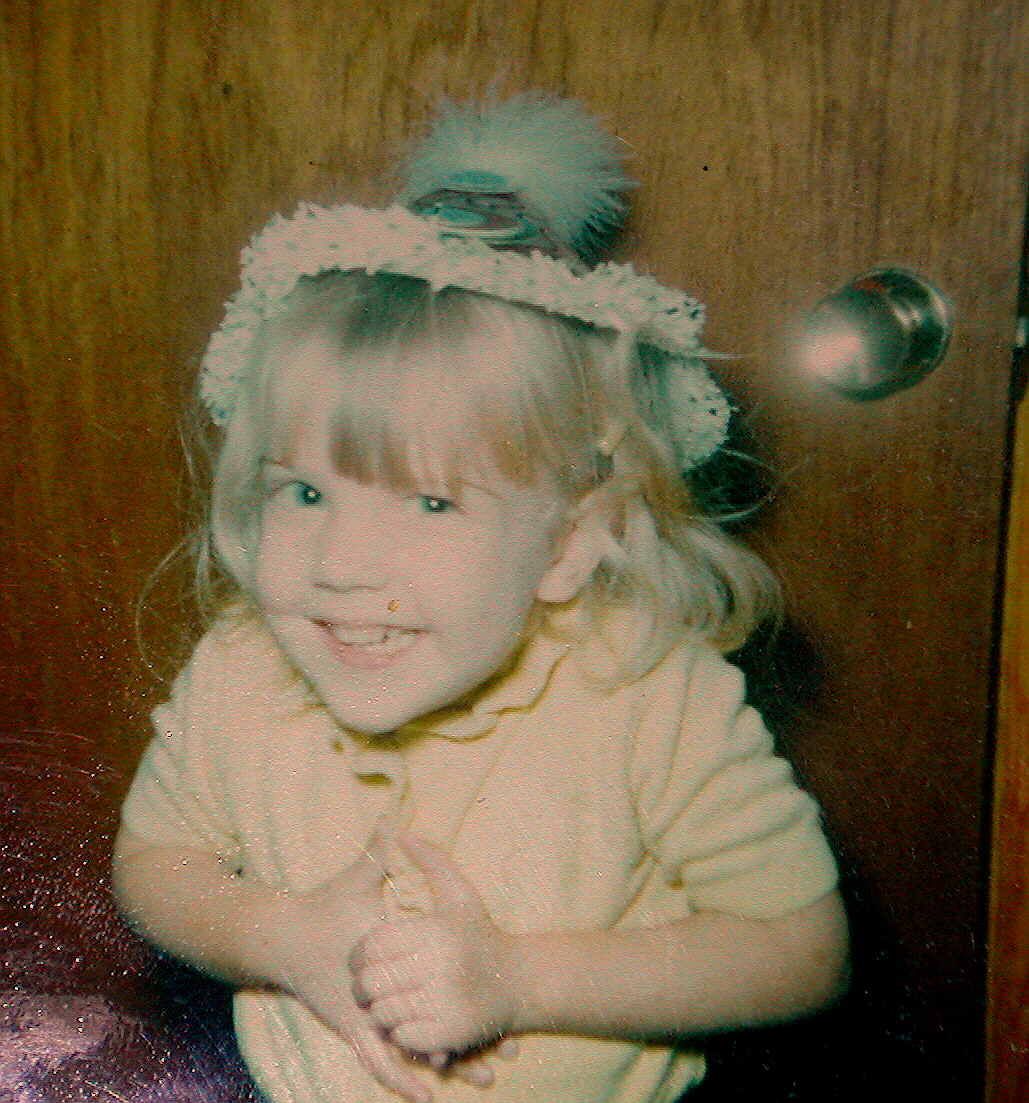
I didn’t intend to eavesdrop…

August 5, 2015

Timeline: breakfast in Savannah, July 30.

I certainly didn’t intend to eavesdrop – listening in feels too much like the part of family psychotherapy called the enactment, when we observe a few moments of an argument that randomly unfolds before us, just to get an understanding of how problems are addressed – but the “free” breakfast in a small, historic inn doesn’t give a lot of space for privacy. So there we were, my hubby and I, in a beautiful old inn, forced to listen to two intelligent, good-hearted parents making fools of themselves in an attempt to talk a school-aged child into eating breakfast. Their efforts included cajoling, bribing, self-deprecating jokes about the father’s supposed fatness and thus how it would be OK for him to go hungry (but not the child), and more increasingly shrill gambols in gambling with their little angel.

How wearisome for them, and how sad for the child, who apparently holds all the cards in this little trio. All day, every step is manipulated by the whims of a child who really doesn’t need or want this much control. The professional part of my brain darkly predicted that this is how they live. The little narcissist-in-training laughs (now adorably but not so for long) at dad’s loving goofiness as he describes himself as “fat” to make her smile and perhaps pick at a bagel and some fruit. Mom tries a bit less hard than dad. I suspect she wishes he would be less willfully weak and is fast losing respect for him, and herself, and feels guilty at her burgeoning resentment towards the dictator-daughter. The teenage years ahead loom miserably, unless the parents decide to nudge their little darling out of the driver’s seat.

They did not ask, and I did not offer…but all that suffering (on the part of all of them – a child running a household suffers, too) is unnecessary. The parents can change how they behave, and the child will catch on quickly enough. No need to drag the girl in for counseling: she is merely taking the scepter handed to her. No, this is an adult problem. If the parents will it, we can fix it. If they choose not to, I predict that the parents’ marriage will suffer and the child, too, will grow up to be  impatient, bossy, and self-absorbed: an impossible-to-please adult who feels entitled to happiness.

As I remarked, at this point, the parents can change that future.

But I was on vacation, not in the office, and it was not dire enough to necessitate violating their privacy by speaking to them.

Still, I wish I could tell them, hey, you can fix this.


Dr. Lori Puterbaugh

© 2015

Posts are for information and entertainment purposes only and should not be construed to be therapeutic advice. If you are in need of mental health assistance, please contact a licensed professional in your area.

Parents go home…Again!

Parents, go home (or at least pretend to read a book)!

A few years ago, I wrote a column for USA Today Magazine entitled, Parents go home! I think it bears repeating.

When your child is at sports practice, or dance practice, or band practice…go home. Leave. Banish yourself. If you can’t because of the organization’s requirements that parents be present, or for purely practical reasons, then at least immerse yourself in reading, tearing yourself away from your book while feigning a vaguely surprised expression when your child presents him/herself, sports-gear in hand, to leave.

The common alternative is the shrieking, waving, thumbs-upping, video-recording parent on the sidelines for every practice. Kiddo, your performance is already on Facebook before you get to the drive-thru for dinner. This parent usually also feels obliged to provide all sorts of coaching advice and constructive criticism on the way home. This is bad for kids in all sorts of ways:

  • Your child is learning to be a narcissist. You are sending the messages that everything little Jason or Jennifer does is spotlight-worthy. It’s not.
  • You are nurturing the seeds of histrionic personality disorder: a character problem in which the person has to be the center of attention at all times. The child who repeatedly complains that you weren’t watching during some random moment of practice has internalized an expectation of being observed and admired at all times.
  • Your child is not learning to appropriately transfer filial obedience and acceptance of guidance from you to other adults. This is part of the benefit of teachers and coaches: other people besides you (mom and dad) can be experts, guides, and sources of leadership.
  • Your child is being taught, by your attention, to focus on performance rather than learning goals. Performance goals focus on enacting a flawless routine. It may mean a lot of intense focus, but a performance goal limits us because of the fear of making mistakes. Ultimately, performance goals lead to stagnation. This is because growth – learning – requires mistakes. Great guitarists, including the rich and famous, practice hours a day because they are always learning, pushing themselves, making mistakes, analyzing those mistakes, and integrating what they learn into new skill sets. The same principle applies to any skill. When you place unending pressure on your child by turning every practice session into a performance, you are creating an environment where doing the “safe” thing is best, even in practice, where failure ought to be risked without fear.

There is also the possibility that the obsessively watching parent is gratifying his/her needs through the child’s performance: a need to feel special, to achieve excellence, to be noticed. Our children do not exist to be flattering mirrors for our egos. They are unique and wonderful in their own right, not for our rights. The parent whose need to be recognized as great, via the reflected glow of a super-kid, needs to do some serious self-reflection of a different sort.

Dr. Lori Puterbaugh

© 2015

Posts are for information and entertainment purposes only and should not be construed to be therapeutic advice. If you are in need of mental health assistance, please contact a licensed professional in your area.


If you need an answer right away, the answer is no…

…if you need a “yes,” a “yes” takes time.

So states the Sirusas Principle, named after a former boss who asserted this to, among others, commercial lending customers who were rather insistent on getting disbursements on the strength of a phone call.

No doubt the same can be said when dealing with children, employees, friends – and anyone else whose misbehavior or request seems to demand an immediate response.

One of the old tenets of parenting, based on behaviorist research, is that we have to immediately intervene with some sort of brilliantly thought-out and superlatively consistent response to every instance of misbehavior. Not only do we inflict this impossible standard on parents (including ourselves), but we carry it out into the world at large. An employee wants an extra day off? A friend needs a favor? Your second cousin wants to know if you’re flying out for a baby shower for your third cousin’s fifth child? Car salesperson wants your decision now? We foray into each encounter expecting that we must have a great decision, instant intervention and surefooted strategy for every possible situation.

Meh, not so much.

This notion no doubt is rooted in psychological research involving birds and rats. People don’t need an immediate consequence to get the message. Even your toddler can wait while you calm down and figure out what message you want to transmit. Sure, yelling and acting like a mean, angry giant works, if by “works” you mean, terrorize your kid and teach them that “might makes right,” no matter what. Was that the lesson you had in mind? If not, announce calmly that a response is forthcoming and change the subject until you can figure out what to do, or remember what your great plan was for just such an occasion.

If you doubt a child, or employee, or friend, can wait for a response to misbehavior or a request, consider whether said person would forget a positive promise. Odds are if you tell a three year old you are going to the zoo “tomorrow,” or in “three days,” the three year old will be able to remember you promised. So, if said three year old is a real stinker at the grocery store, you can say, “Wow, I’m so disappointed. I thought you knew better how to behave at the store. We will have to have a consequence when we get home.” No yelling, no screeching, no suspicious looks from naïve fellow shoppers who have not yet learned how difficult children can be. Your child will not forget that you are “thinking.” Meanwhile, you can calm down, think it through, and come up with a response that makes sense. The consequence may mean a short period of quiet “thinking time” for the three year old – and a very short conversation (one or two minutes) about making good choices next time.

Some people feel they must act immediately or they fear they will look weak, or, knowing their own dislike for confrontation, they suspect they will simply allow themselves to be misused. This is sort of fear is a powerful force, and merits its own attention, beyond the scope of this short essay.

Whether it’s fear of looking weak or fear that you will ultimately fail to act at all, consider learning to put that reflexive need for action away and take a deep breath before you decide what to do. Perhaps you will decide that making that first decision be to temporarily postpone a specific decision is the most useful option for you.

Dr. Lori Puterbaugh

© 2015

Happiness Hint #1: take happiness hints with a grain of salt!

The world is full of advice on happiness, and there is plenty of research on happiness, too. A word of advice: investigate before you “buy” into information or guidance on becoming happier. Happiness, like beauty, is not something on which people universally agree. Sometimes happiness refers to having fun; at other times, it refers to a more enduring state of life satisfaction, meaning and purpose.

Here’s an example: a few years back, some researchers announced that their study indicated that having children decreases “happiness,” and that’s the headline. Under the headline, deep in the research, you find a narrow definition of happiness used that reduces happiness to little more than an assessment of how much fun one might be having at any given time. For most parents (I hope!), while there are certainly aspects of parenting that are not as much fun as others, that is not the same as being substantially less happy – finding life less purposeful, less rich with meaning and emotion – than before kids. So, as you seek answers, be aware that often hundreds of pages of research have been selectively narrowed to a blurb. The “facts” presented to us are often just the tip of the iceberg.

Dr. Lori Puterbaugh

© 2015

Odds are…your child is not autistic

Your kid who can’t eat peas because peas “feel gross” is probably not autistic. There is tremendous fear around the ever-expanding construct of Autistic Spectrum Disorder, including rapidly inflating rates of incidence. Interested readers are referred to the ongoing and vociferous feud about this within the American Psychiatric Association and other organizations. Suffice it to say, many experts worry that the increasingly flexible diagnostic criteria, which are, after all, a checklist of concerns, can now embrace a larger number of children who are not autistic but rather are within what used to be the wide range of normal, with a few little quirks. For example, many sensory sensitivities are  normal. I, for one, cannot stand those fuzzy blankets with satin edges. If that fuzzy stuff touches me I feel like my cuticles are crawling. It just makes me crazy. Other people, of course, find fuzzy blankets cozy and comforting but to me, that’s like suggesting nails on a chalkboard are melodious. Some children are more sensitive to food textures than others; some are more sensitive to noise, or bright lights. Without other evidence, do not make yourself, and your child, miserable by assuming your child has a brain disorder.

If you have concerns, consult your pediatrician.  Early intervention and support are critical for children, and minimizing real problems, or over-emphasizing minor quirks, can get in the way of children who really need extra care and assistance getting the help they deserve.

Finally…I like peas. They are not “gross” to me, although there was that protracted standoff when I was four…

D Puterbaugh © 2015

loriage3